How-to
How to dry clothes indoors quickly
Published
Note: This page contains affiliate links. If you buy through them we may earn a commission at no extra cost to you. Learn more
In short
Spin the load as fast as the fabrics allow, hang items with space between them, and dry them in a small room with the door shut and a dehumidifier pointed at the washing. Airflow and low humidity matter more than heat. A heated airer or a fan speeds things up further, and a dehumidifier stops the moisture ending up on your walls.
Products for this job
Compare all 8 products20 L/day
Meaco Arete Two 20L: 6 hour laundry mode
Check price on AmazonAffiliate link21 L/day
Ariston Deos 21S NET: Super Laundry function
Check price on AmazonAffiliate link10 L/day
EcoAir DD3 Slimline: laundry mode and swinging louvre
Check price on AmazonAffiliate link
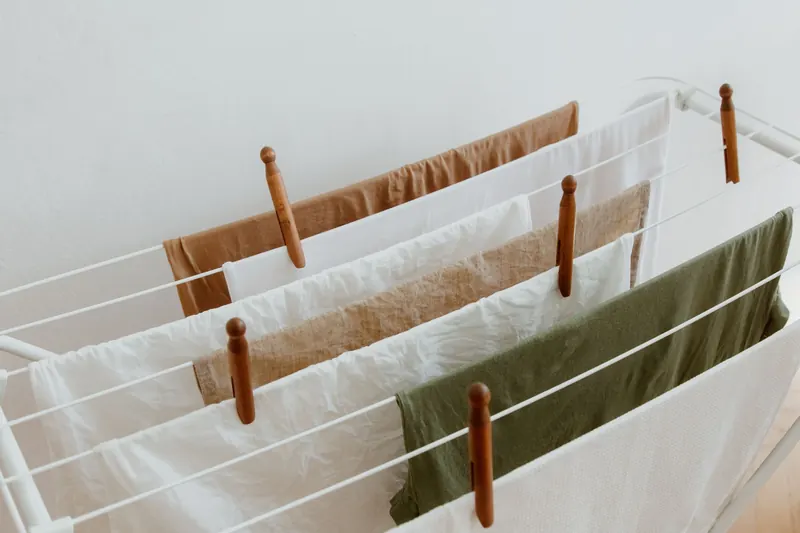
Drying washing indoors in a British winter can feel endless: towels still damp after two days, a musty smell, and windows running with water. The good news is that a few changes, made in the right order, can cut drying time dramatically. The biggest gains come from getting water out in the washing machine, giving air room to move around the clothes, and keeping the air around them dry. This guide takes you through each step in order of how much time it saves, then covers what to avoid.
Step by step
Each of these is simple, but together they make the difference between overnight drying and a two-day wait. If you only do two, choose the fast spin and the dehumidifier in a closed room.
- 1
Use the fastest spin speed the care labels allow, or add an extra spin.
- 2
Shake each item out as you take it from the drum, so it is not creased into a damp ball.
- 3
Hang items with a gap between them, ideally a hand's width; do not double up on rails.
- 4
Hang heavy items such as jeans and towels on the outer rails where air reaches them best.
- 5
Choose a small room and close the door, so the air you are drying is a small volume.
- 6
Stand a dehumidifier about a metre from the airer with its outlet pointed at the clothes.
- 7
Switch on laundry mode if it has one, or set the fan to high.
- 8
Turn items halfway through and move the slowest to the outside.
Why spin speed comes first
Every drop of water the washing machine removes is a drop you do not need to evaporate in the house. A higher spin leaves clothes noticeably less wet, which shortens drying time and cuts the moisture added to your home. Our explainer on how much water a wash load puts into your home explains why this matters.
If you have delicate items that need a gentle spin, wash them separately so the rest of the load can be spun hard.
Spacing and airflow
Water leaves fabric fastest when dry air keeps moving across it. Clothes bunched together trap a humid pocket of air between them that slows drying. Spread them out, hang shirts on hangers from a door frame or rail, and leave gaps. A fan blowing gently across the airer helps if you do not have a dehumidifier.
Avoid draping clothes on radiators. It can slow the heating of the room, it blocks heat output, and it puts moisture straight into the air next to the coldest surface, the window above.
Using a dehumidifier
A dehumidifier is the single most effective aid. It keeps the air around the washing dry so water keeps leaving the fabric, and it collects that water in its tank instead of letting it settle on windows. Close the door to keep the dehumidifier working on a small space. Many models have a laundry mode; see dehumidifier laundry mode explained.
A compressor model is cheaper to run in a heated room, while a desiccant model works better in a cold one and adds a little warmth. Our guides list both.
Heated airers and other helpers
A heated airer warms the fabric so water evaporates faster, which is useful for small loads and towels. Paired with a dehumidifier in the same room, it gives some of the quickest results without a tumble dryer. See how to use a heated airer for loading tips.
If you have neither, choose a room with an extractor fan, such as a bathroom, run the fan and keep the door closed. Opening a window slightly also helps, though it lets heat out.
- Dehumidifier and closed door: biggest gain
- Heated airer: faster for small loads
- Fan: helps airflow cheaply
- Extractor fan room: better than a living room with no ventilation
What to avoid
Do not dry washing in a cold bedroom with the door shut and no dehumidifier; the water will end up on the walls and window. Do not cover the vents of a dehumidifier or a heater with clothes. Do not leave clothes damp for days, as that is the usual cause of a musty smell; see why clothes smell damp after drying.
Note:Keep wet clothes and airers away from sockets, extension leads and heaters, and never cover any heater or dehumidifier air outlet.
Frequently asked questions
What is the fastest way to dry clothes indoors without a dryer? Spin hard, space items out, and dry them in a small closed room with a dehumidifier pointed at them. Adding a heated airer speeds it up further.
Is it bad to dry clothes indoors? It adds moisture to the air, which can lead to condensation and damp in a cold or poorly ventilated home. Ventilation or a dehumidifier deals with that.
Should I open a window when drying clothes inside? If you have no dehumidifier, a slightly open window or an extractor fan helps the moisture escape. With a dehumidifier running, keep the window and door shut.
What you need
- Check price on AmazonAffiliate link
Meaco Arete Two 20L: 38 dB and H13 HEPA filter