Guide
Do heated airer covers make a difference?
Published
Note: This page contains affiliate links. If you buy through them we may earn a commission at no extra cost to you. Learn more
In short
A heated airer cover usually helps clothes dry faster, because it holds warm air around the rails instead of letting it drift away. That can cut the hours the airer needs to run. The trade-off is that it also holds moisture in, so a cover works best with some ventilation or a dehumidifier nearby, and with items spaced out. Only use a cover designed for your airer.
Products for this job
Compare all 8 products20 L/day
Meaco Arete Two 20L: 6 hour laundry mode
Check price on AmazonAffiliate link21 L/day
Ariston Deos 21S NET: Super Laundry function
Check price on AmazonAffiliate link10 L/day
EcoAir DD3 Slimline: laundry mode and swinging louvre
Check price on AmazonAffiliate link
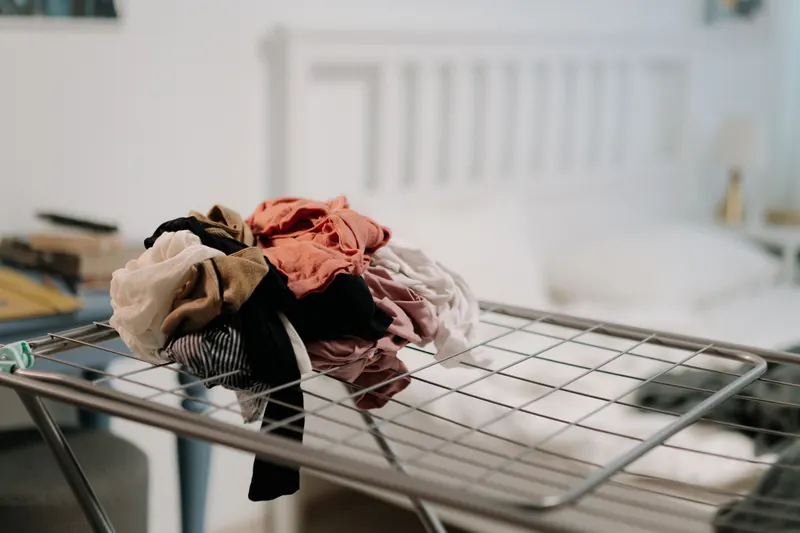
A heated airer warms only the fabric touching its rails. A lot of the heat it gives off simply rises into the room. Covers are designed to change that by wrapping the airer in a fabric tent that keeps warm air close to the clothes. Some airers come with one, and others offer it as an optional extra. This explainer covers how a cover works, why it can shorten drying, the trade-off with moisture, and how to get the most from one safely.
How a cover works
Warm air rises. Without a cover, the heat from the rails warms the air around the airer, which then drifts up and away and mixes with the cooler room air. With a cover over the frame, that warm air is held in a pocket around the clothes. The air inside the cover is warmer than the room, so it can hold more water vapour, and fabric that is not touching a rail still gets some benefit from the warmth.
The result is that more of the airer's heat goes into drying the clothes rather than warming the room in general. That is why covers are often described as making a heated airer behave a little like a very gentle drying cabinet.
The benefits
The main benefit is shorter drying time. Since running cost is watts multiplied by hours, a shorter session uses fewer kWh. Our article on heated airer running costs shows the maths.
- Holds warm air around the clothes
- Helps items not touching a rail dry faster
- Can cut the hours the airer needs to run
- Keeps more heat on the clothes and less in the room
- Gives a tidier look while drying
The trade-off with moisture
The same cover that holds warm air in also holds moist air in. As the clothes dry, the air inside the cover gets humid. If it becomes saturated, drying slows. Most covers are designed with some openings or a breathable fabric so moist air can escape, and some makers suggest leaving a gap at the bottom or top.
The water still ends up in the room in the end. A cover does not remove moisture, it just changes how quickly the clothes give it up. In a home with condensation, pair the airer with ventilation or a dehumidifier. Our comparison of a heated airer vs a dehumidifier explains how they work together, and the best dehumidifiers for drying clothes guide covers machines with laundry modes.
Which airers come with a cover
Some heated airers are sold with a matching cover in the box, and others offer a cover as a separate accessory or in a bundle. Lakeland's Dry:Soon range, for example, is widely sold with matching covers for its tiered models, but bundles and sizes change, so check the listing for your exact model before buying.
Covers are shaped to fit a particular frame. A cover made for one airer may not fit another, and an ill fitting cover can sag onto the rails or block vents. Buy the one the maker lists for your model.
Note:Only use a cover designed for your heated airer. Do not drape blankets, duvets or towels over the airer as a makeshift cover, and follow the maker's safety instructions.
How to get the best from a cover
A cover works best with a sensible setup. Spacing, airflow and the room all still matter.
- 1
Spin the load as fast as the care labels allow.
- 2
Hang items with gaps, so warm air can circulate inside the cover.
- 3
Fit the cover as the maker shows, leaving any vents or gaps clear.
- 4
Use the airer's timer so it stops when the load should be dry.
- 5
Ventilate the room or run a dehumidifier to catch the moisture.
- 6
Remove the cover and let the clothes air briefly before folding.
Is a cover worth it?
If you use a heated airer often and find loads take longer than you would like, a cover designed for it is usually one of the simplest ways to speed things up and cut hours. If your home already has condensation, a cover alone will not help with that, and a dehumidifier will make the bigger difference. Our article on whether a heated airer is worth it covers the wider choice, and how to use a heated airer gives a full routine.
For a low energy setup in a damp home, a covered heated airer plus a compressor dehumidifier in a small closed room is a popular combination. The best low energy dehumidifiers guide ranks machines by stated watts.
Frequently asked questions
Do heated airer covers work? They usually speed up drying by holding warm air around the clothes, which can cut the hours the airer runs.
Can I use any cover on my heated airer? No. Use the cover the maker lists for your model, as a poor fit can block vents or sag onto the rails.
Does a heated airer cover cause damp? It does not add moisture, but it does not remove it either. The water from the clothes still goes into the room, so ventilate or use a dehumidifier.
Should I leave a gap in the cover? Follow the maker's instructions. Many covers have openings so moist air can escape, which stops the air inside becoming saturated.
What you need
- Check price on AmazonAffiliate link
Meaco Arete Two 20L: 38 dB and H13 HEPA filter