Fix
Why clothes smell damp after drying indoors
Published
Note: This page contains affiliate links. If you buy through them we may earn a commission at no extra cost to you. Learn more
In short
Clothes smell damp after drying indoors mainly because they took too long to dry. When washing stays damp for many hours in still, humid air, microbes on the fabric have time to grow and leave a musty smell. Spin faster, space items out, move air over them and lower the room humidity with a dehumidifier, and the smell usually goes. A dirty washing machine or overloaded drum can add to it.
Products for this job
Compare all 8 products20 L/day
Meaco Arete Two 20L: 6 hour laundry mode
Check price on AmazonAffiliate link21 L/day
Ariston Deos 21S NET: Super Laundry function
Check price on AmazonAffiliate link10 L/day
EcoAir DD3 Slimline: laundry mode and swinging louvre
Check price on AmazonAffiliate link
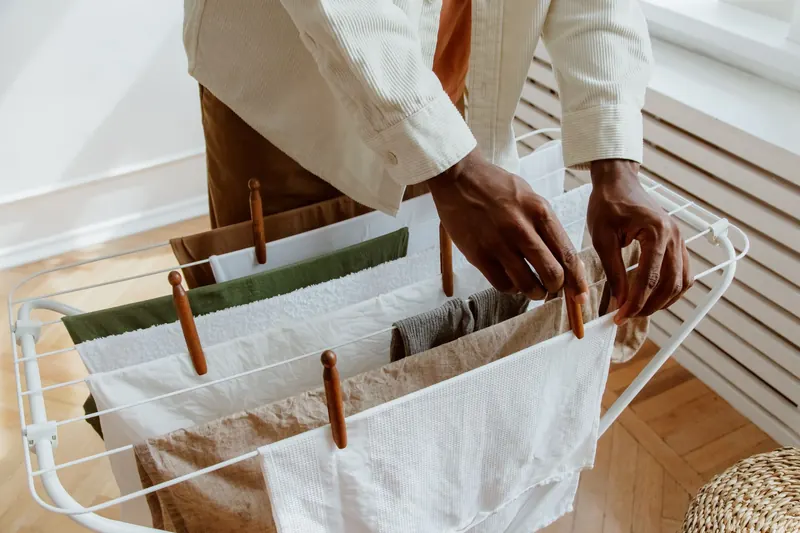
Few things are more frustrating than washing a load, drying it on the airer and finding it smells worse than before. Towels and thick cotton are the worst. The good news is that the cause is well known and the fix is mostly about speed. The quicker a load goes from wet to dry, the less chance any smell has to develop. This guide explains why it happens and the practical steps that cut drying time in a typical British home through the colder months.
Why slow drying causes a musty smell
Washing removes most dirt, but it does not sterilise fabric. A few microbes survive, along with traces of skin oil and detergent. Damp, warm fabric is an ideal place for them to multiply. Over many hours they produce the stale, musty smell people describe as damp washing.
In summer, a line outside dries clothes in a few hours. Indoors in winter, a full load on an airer in a closed room can take a day or more, because the air around it quickly becomes saturated. Each extra hour gives the smell more time to develop. Thick items such as towels, jeans and hoodies dry slowest and usually smell first.
Get more water out before you hang it
The less water left in the fabric, the faster it dries. Use the highest spin speed the care labels allow. A second spin cycle on heavy items such as towels can help. Do not overload the drum, as a packed drum both washes and spins less effectively.
Shake each item out before hanging it. Creased, bunched fabric traps water in folds and dries unevenly, so the inner layers stay damp long after the surface feels dry.
Spacing and airflow on the airer
Washing dries from the surface outwards, so the more surface exposed to moving air, the quicker it dries. Leave gaps between items and avoid doubling towels over a rail where you can. Hang thick items on the outer rails where air moves most freely, and turn them halfway through.
Still air is the enemy. Air next to wet fabric becomes saturated, and without movement that saturated layer sits there. A fan, a dehumidifier's airflow or a slightly open window all keep fresh, drier air moving across the clothes.
- Highest safe spin speed
- Shake out every item
- Gaps between garments
- Thick items on the outside rails
- Turn heavy items halfway through
Lower the humidity with a dehumidifier
Drying a load in a closed room pushes the humidity up quickly, and once the air is near saturation, drying slows right down. A dehumidifier removes that moisture as it is released, keeping the air dry enough for the clothes to keep drying. Many models have a laundry mode that runs at full power with the fan on high for a set time.
Put the airer in a small room, close the door, and set the dehumidifier about a metre away with its airflow pointed at the clothes. Shutting the door keeps the machine working on a small volume of air rather than the whole house. Our guide to the best dehumidifiers for drying clothes compares laundry modes and airflow, and dehumidifier laundry mode explained covers the settings.
Check the washing machine and detergent
If clothes smell musty straight out of the drum, before drying has had a chance to cause it, the washing machine may be the source. Residue builds up in the door seal, drawer and drum, especially with frequent low temperature washes. Many makers recommend a regular maintenance wash at a high temperature with no load, and wiping the door seal and leaving the door open between washes.
Using too much detergent or fabric conditioner can leave residue in fabric that holds on to smells. Follow the dosing on the pack for your load size and water hardness. Do not leave wet washing sitting in the drum after the cycle ends, as smells begin to develop quickly in a closed, damp drum.
Rescue a load that already smells
Once a load smells musty, drying it again rarely fixes it. Rewash it, spin it hard and dry it quickly with good airflow and low humidity. For towels, a hotter wash within the care label limits can help. Then dry them first on the most open part of the airer.
If you dry indoors often, make the fast routine the default: a full spin, good spacing, a closed small room and a dehumidifier or heated airer. Our guide on how to dry clothes indoors quickly sets out a full routine, and is a heated airer worth it compares heated rails with a dehumidifier.
Frequently asked questions
Why do my towels smell after drying indoors? Towels are thick and hold a lot of water, so they dry slowly and give microbes time to grow. Spin them hard, hang them open with gaps and use a dehumidifier or a fan to speed drying.
Does a dehumidifier stop clothes smelling damp? It helps by cutting drying time. Drier air lets the fabric give up its water faster, which leaves less time for a musty smell to develop.
Should I open a window when drying clothes inside? A window open a little helps move damp air out, but in cold weather it also cools the room and can slow drying. With a dehumidifier running, keep the door and window closed so it works on a small volume of air.
How long should washing take to dry indoors? There is no fixed figure, as it depends on fabric, spin speed and the room. Aim for the same day. If loads regularly take more than a day, add airflow and lower the humidity.
What you need
- Check price on AmazonAffiliate link
Meaco Arete Two 20L: 38 dB and H13 HEPA filter