Guide
Dew point explained: why walls and windows get wet
Published
Note: This page contains affiliate links. If you buy through them we may earn a commission at no extra cost to you. Learn more
In short
Condensation forms on any surface colder than the dew point of the air touching it. The dew point is the temperature at which air becomes saturated and water starts to condense, and it depends on the air's temperature and relative humidity. In a UK room at 20 °C and 60 % RH the dew point is about 12 °C, so window glass and outside walls colder than that get wet. Lower the humidity or warm the surface to stop it.
Products for this job
Compare all 7 products20 L/day
Meaco Arete Two 20L: intelligent humidity mode
Check price on AmazonAffiliate link30 L/day
Pro Breeze 30L/day: humidity sensor and drain hose
Check price on AmazonAffiliate link21 L/day
Ariston Deos 21S NET: set humidity by app
Check price on AmazonAffiliate link
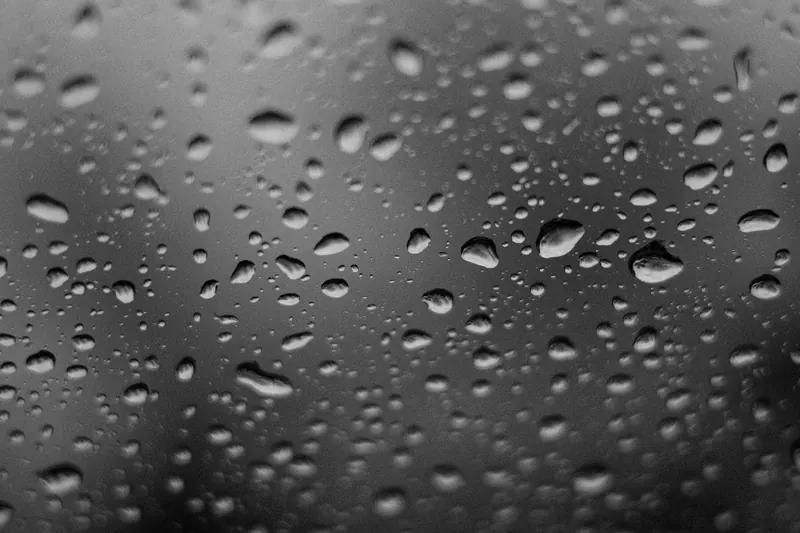
Every winter, British homes wake up to streaming windows, wet sills and damp corners. It is easy to blame the windows or the walls, but the real cause is simple physics: warm, moist air meeting a cold surface. Once you understand dew point, it becomes much clearer why condensation appears where it does and which fixes actually work. This explainer covers relative humidity, dew point and surface temperature, with a worked example and a link to our dew point calculator.
Relative humidity in plain terms
Air always contains some water vapour. The warmer the air, the more vapour it can hold. Relative humidity, written % RH, is how much it holds now compared with the most it could hold at that temperature. Air at 60 % RH holds 60 % of its maximum.
The key point is that relative humidity changes with temperature even when the amount of water stays the same. Cool a parcel of air and its relative humidity rises. Cool it enough and it reaches 100 %, and any further cooling makes water condense out. That temperature is the dew point.
A worked UK winter example
Take a living room at 20 °C and 60 % RH, which is common in a heated home in winter. Using the standard Magnus formula, the dew point of that air is about 12 °C. Any surface colder than 12 °C will collect condensation when room air touches it.
Single glazing on a cold night can be well below that. The inner pane of older double glazing and a solid outside wall in a corner can be too. A wall behind a wardrobe, cut off from the room's warmth, may also drop below 12 °C. Meanwhile an inside wall at 18 °C stays dry. That is why condensation shows up in particular spots rather than everywhere.
| Relative humidity | Approximate dew point |
|---|---|
| 40 % | 6 °C |
| 50 % | 9 °C |
| 60 % | 12 °C |
| 70 % | 14 °C |
| 80 % | 16.4 °C |
Try your own figures
Our dew point calculator takes your room temperature and humidity and gives the dew point, so you can see which surfaces are at risk. It can also work backwards: enter the temperature of a cold wall and it shows the humidity you need to stay below to keep it dry.
A cheap digital hygrometer gives the room humidity, and a simple infrared thermometer gives a surface temperature. Together with the calculator, they show exactly why a particular corner gets wet.
Two ways to stop condensation
Because condensation needs a surface below the dew point, there are only two levers: lower the dew point by reducing the moisture in the air, or raise the surface temperature. Most practical fixes do one or both.
| Fix | Lowers dew point | Warms surface |
|---|---|---|
| Extractor fans in kitchen and bathroom | Yes | No |
| Opening windows briefly | Yes | No |
| Dehumidifier | Yes | No |
| Drying washing outside or with a dehumidifier | Yes | No |
| Steady background heating | Partly | Yes |
| Moving furniture off outside walls | No | Yes |
| Better glazing or insulation | No | Yes |
Where a dehumidifier fits
A dehumidifier lowers the room's humidity and so its dew point. Taking the example room from 60 % to 50 % RH drops the dew point from about 12 °C to about 9 °C, so surfaces between 9 and 12 °C stop collecting water. That is often enough to dry up windows and corners that were wet every morning.
It will not fix a surface that is far colder than any sensible dew point, such as single glazing on a frosty night. For that, warming the surface or improving the glazing helps more. Our guides to the best dehumidifiers for condensation and how to stop condensation on windows cover the practical side, and dehumidifier humidity settings gives targets.
Condensation versus other damp
Condensation is the most common kind of damp in UK homes and follows the patterns above: worse in winter, in the morning, on cold surfaces and behind furniture. A tide mark low on a wall, or a patch that grows after rain, points to rising or penetrating damp instead. Those need a surveyor or builder, not a dehumidifier. Our article on damp walls in a bedroom has a table for telling them apart.
Frequently asked questions
What is dew point in simple terms? It is the temperature at which air becomes saturated and water starts to condense. Any surface colder than the dew point gets wet.
Why do my windows get condensation but not my walls? Glass is usually the coldest surface in the room, so it falls below the dew point first. Cold outside walls and corners are often next.
What humidity stops condensation? It depends on how cold your surfaces are. Use the dew point calculator with your coldest surface temperature to find the humidity you need to stay below.
Does heating stop condensation? Steady heating warms walls and glass, which helps. It also lets air hold more moisture, so ventilation or a dehumidifier is still needed to remove it.
What you need
- Check price on AmazonAffiliate link
Meaco Arete Two 20L: 38 dB and H13 HEPA filter